The Brands Are Talking To You
I think the thing I've been learning over the past few weeks is just how much words matter in design. You might find this strange because my background is as a freelance writer/content marketer, so you would expect that I already understand the importance of words.
And I believe that I do, on one level, I try to write often and a lot because I believe that words matter after all.
It's just that I'm realising that I haven't spent a lot of time thinking about using words in the context of product design for digital interfaces. I've designed God knows how many email fields but never stopped to think about whether there is an important difference between "Enter email" and "Type email" for the people who will use those email fields.
My favourite pastime these days is reading design system (or brand guideline) documentation from some of the companies renowned for good design. I mention this because recently I started reading Adobe's Spectrum design system documentation, and I was genuinely a bit surprised by how much care, thought, and rigour went into crafting the content guidelines.
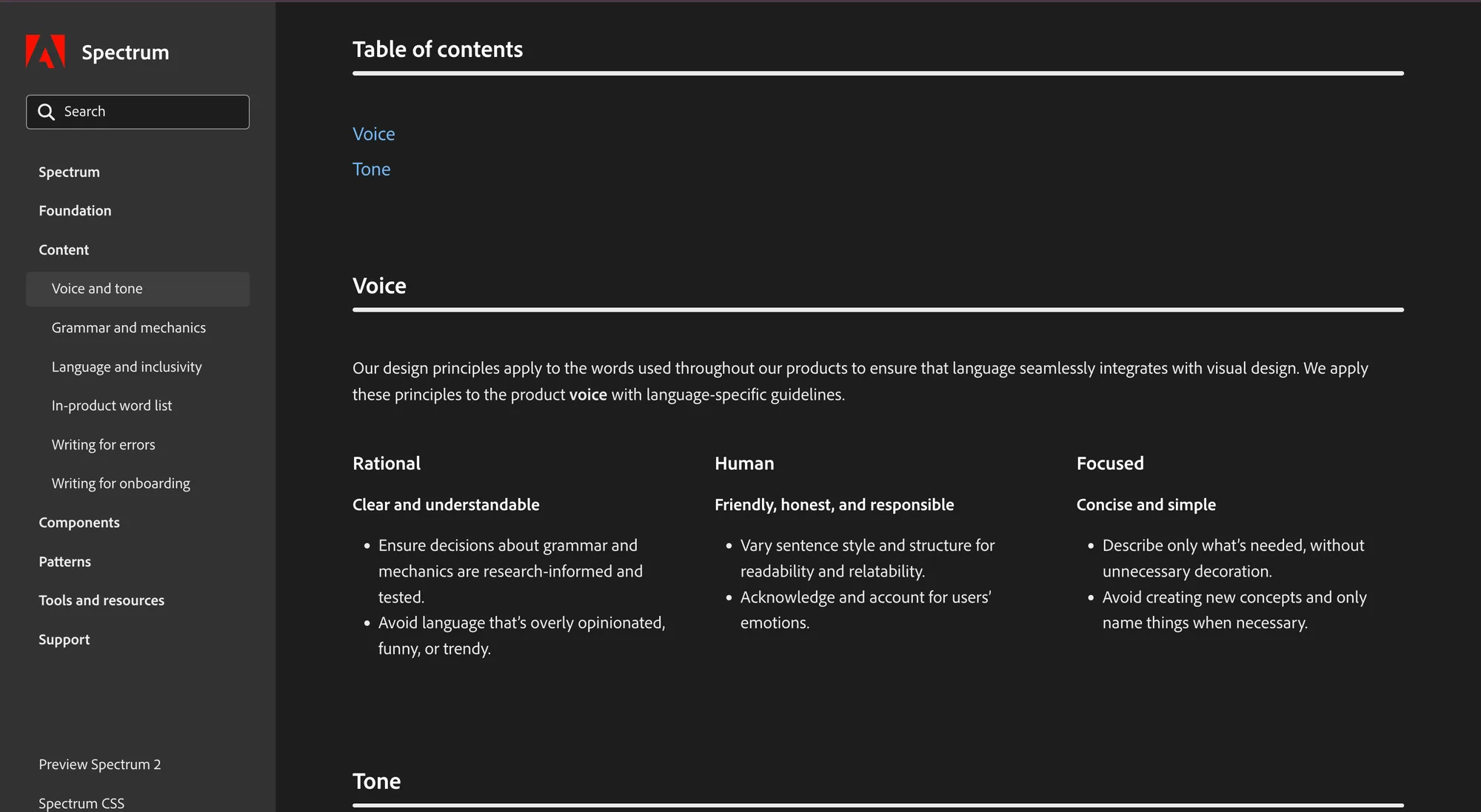
Voice and tone, Grammar and mechanics — these are all things I would not have been surprised to come across in my time as a content writer, but seeing them in the design system documentation of one of the world's most well-known creative organisations was a bit surprising, honestly.
Since Spectrum, I've also read brand identity guidelines for UiPath, and this brilliant redesign for Fintech company Wise, and I keep being struck by the same insight: these organisations put a lot of care into deciding how they speak to the world. They think deeply about how to communicate their core message in a way that resonates with their target audience, about what to say and how to say it.
Of course, in retrospect, this shouldn't be surprising to me at all. Words are incredibly powerful, I know that, I really do. And at the end of the day, a business or brand is just like anyone else jostling for attention in the digital landscape — a landscape dominated by… you guessed it, words! Whether you're watching an influencer on TikTok, or reading tweets on X, it's words all the way down. So it's no surprise that businesses and brands want to speak to their audience in ways that grab their attention, convince them, inspire them, woo them, earn their trust, and make them fans not just customers.
I should know all this, I really should.
But more than knowing this, it should show up in how I work. So this is my resolve: next time, before I dive into the colour tokens and spacing and border radius and all that jazz at the inception of a new design endeavour, I want to take a step back to properly understand the brand. What is it trying to say? To whom is it speaking? How should it speak? How should it not speak?
Let us pray.